Dry Cupping in Engineered Wood Floors: Understanding the True Cause
Engineered wood flooring is designed to be more dimensionally stable than solid hardwood, which is why many homeowners and builders choose it for modern homes. But even engineered flooring is not immune to environmental stress. One of the most common complaints we see in inspections is “dry cupping”, a condition where the edges of each plank curl upward even though no moisture is present.
Unlike traditional cupping caused by moisture imbalance, dry cupping is a low-moisture distortion, and understanding its cause is crucial to preventing long-term flooring failures.
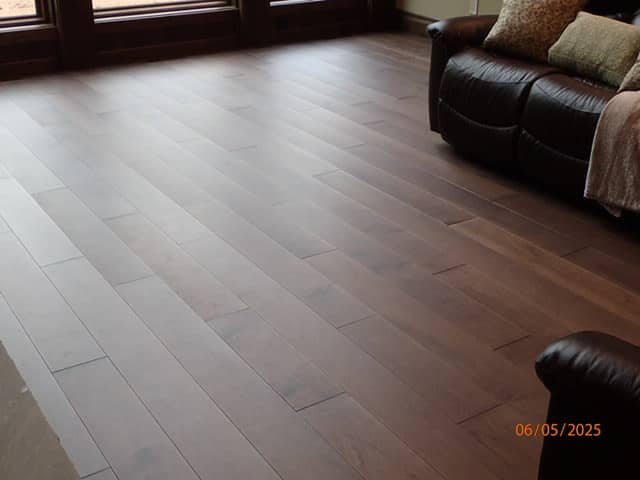
Figure 1 – Dry cupping on an engineered wood floor due to low levels of relative humidity
What in Is Dry Cupping?
- Dry cupping occurs when:
- The edges of the planks lift upward
- The center of the board sinks slightly, creating a concave profile
- The floor may feel uneven underfoot
- The finish may begin to show stress or micro-cracking at the edges
In most cases, homeowners assume the floor has moisture damage. In reality, dry cupping is almost always caused by the opposite problem: the indoor environment is too dry for the flooring to remain stable.
Why Does Dry Cupping Happen? The Engineering Behind It
Engineered wood is constructed in layers, typically with:
- A hardwood veneer on top
- Cross-laminated plywood beneath
- Adhesive bonding between layers
This construction makes it more stable—but not invincible. When indoor humidity drops too low, the wood layers shrink at different rates. The tension created between layers pulls the edges upward, resulting in dry cupping.

Figure 2 – Profile of an engineered wood floor
Primary Cause: Low Indoor Relative Humidity (RH)
Dry cupping occurs when the indoor RH falls below the manufacturer’s recommended range—most often below 30-35% RH.
Engineered wood is manufactured to perform at humidity levels between 30–50% RH (some manufacturers specify 35–55%). When the environment drops significantly below these levels, the top layer loses moisture faster than the layers beneath it, creating tension within the board.
- Common scenarios that lead to dry cupping:
- Forced-air heating during the winter months
- Homes without whole-home humidifiers
- New construction drying out the structure
- High-elevation climates (such as Colorado)
- Seasonal humidity swings without stabilization
- Wood plank is manufactured at too high a moisture content for the environment
Once the EMC (equilibrium moisture content) of the wood drops too low, the boards respond by deforming upward at the edges.


Figure 3 – Low levels of relative humidity
Secondary Contributors to Dry Cupping
While low humidity is the primary cause, the following factors can intensify the condition:
- 1. Improper Acclimation
If the flooring was delivered with a higher moisture content than the site conditions, the planks may undergo aggressive shrinkage after installation.
- 2. Inadequate Jobsite Conditioning
Installing flooring before HVAC systems are operational is one of the leading causes of mid-winter dry cupping.
- 3. Rapid Moisture Loss
Sudden drops in relative humidity (RH)—such as turning on the heat for the season—can cause the top veneer to dry faster than the core materials.
- 4. Veneer or Adhesive Characteristics
Some products react more aggressively to moisture changes due to veneer thickness, wood species, adhesive type, or core composition.
- 5. Wide Plank Formats
The wider the plank, the more visible and pronounced the movement.
How Dry Cupping Differs from Moisture Cupping
- Dry Cupping
- Caused by low humidity
- Floorboards become concave but remain dry
- Edges lift due to shrinkage of the top layer
- Often appears in winter
- Moisture Cupping
- Caused by excess moisture beneath the floor
- Edges lift due to moisture absorption from below
- Subfloor, slab, or moisture readings are elevated from the bottom to the top of the floorboards
- This condition is more prominent with solid wood flooring
Accurate diagnosis requires professional testing using moisture meters and hygrometers. Visual inspection alone is not enough.
Can Dry Cupping Be Fixed?
Possible—but it depends on how long the condition has been present and how severe the deformation is.
- Potential Outcomes:
- Mild dry cupping may flatten out once proper humidity is restored
- Moderate cupping may improve, but not fully correct
- Severe or prolonged dry cupping may become permanent
- Finish damage, veneer checking, or core stress fractures may appear if ignored
Engineered wood is durable, but when exposed to extremely dry conditions, the damage can become irreversible.
How to Prevent Dry Cupping
- 1. Control Indoor Humidity
Maintain RH between 30–50% (or manufacturer-specified range) year-round.
- 2. Install Whole-Home Humidification
Especially in dry climates or forced-air heating systems. (This is usually a requirement before the flooring is delivered)
- 3. Monitor the Environment
Use inexpensive digital hygrometers on each level of the home.
- 4. Proper Acclimation
Flooring should be acclimated to the expected living conditions, not to the warehouse conditions.
- 5. Avoid Sudden Environmental Changes
Gradually adjust HVAC settings during seasonal transitions.

Figure 4 – Installing a whole-house humidifier on the furnace
Final Thoughts
Dry cupping is a clear sign that the indoor environment has fallen outside the range required for engineered wood flooring to perform as intended. While engineered wood floors are designed to improve dimensional stability compared to solid wood, they are not immune to moisture-related movement and continue to depend on controlled relative humidity, stable temperature conditions, and proper site conditioning.
The good news? Dry cupping is preventable—and in some cases reversible—when homeowners understand the relationship between humidity and wood movement.
If dry cupping is observed or there is concern about environmental suitability, a professional inspection can identify the underlying cause and provide clear, evidence-based recommendations for remediation.